SCIENCE SNACKS: The Human Body
Time to train your brain and body in tandem - Science Snacks is where kinetic exploration meets clever coaching. This course isn’t about rote memorization - it’s about embodied recognition.
Led by the ever-playful and perpetually curious Holly Fiske, Science Snacks serve bite-sized brilliance that nourishes not just knowledge, but deep, intuitive understanding. Here, anatomy becomes a conversation, not a translation. It is the story of the way your body moves told in a way that moves you.
We zoom out to see the big picture, connect the dots, and speak in the language your body understands: imagery, rhythm, and wonder. Clear the clutter of flashcard champs and get straight to the business of the body.
Now let’s put our best foot forward and truly make an imprint… it’s my treat to talk FEET!
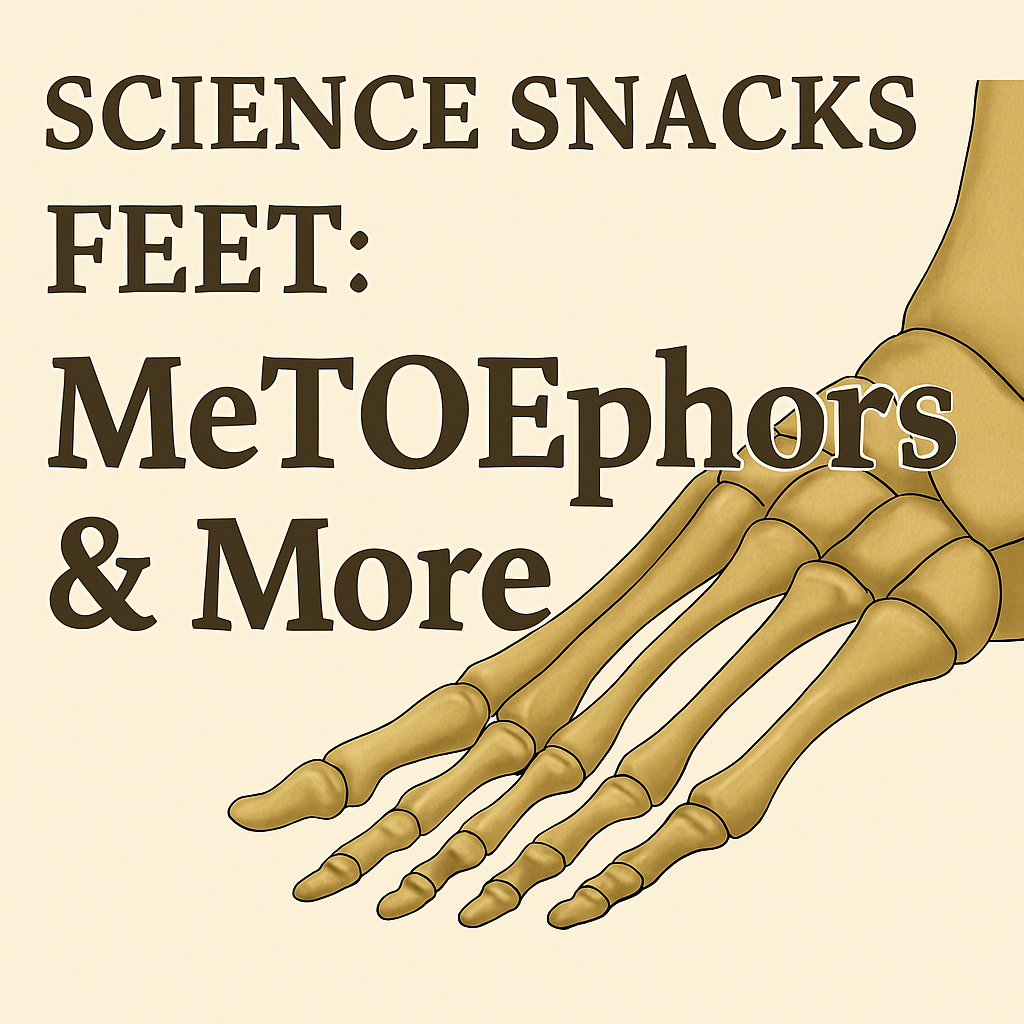
👣Feet: Set the Foundation
Your feet silently orchestrate movement, absorbing impact, providing propulsion, and maintaining balance. They are the foundation of your body and base of support for most of our bipedal life.
MeTOEphores & ANKLEogies
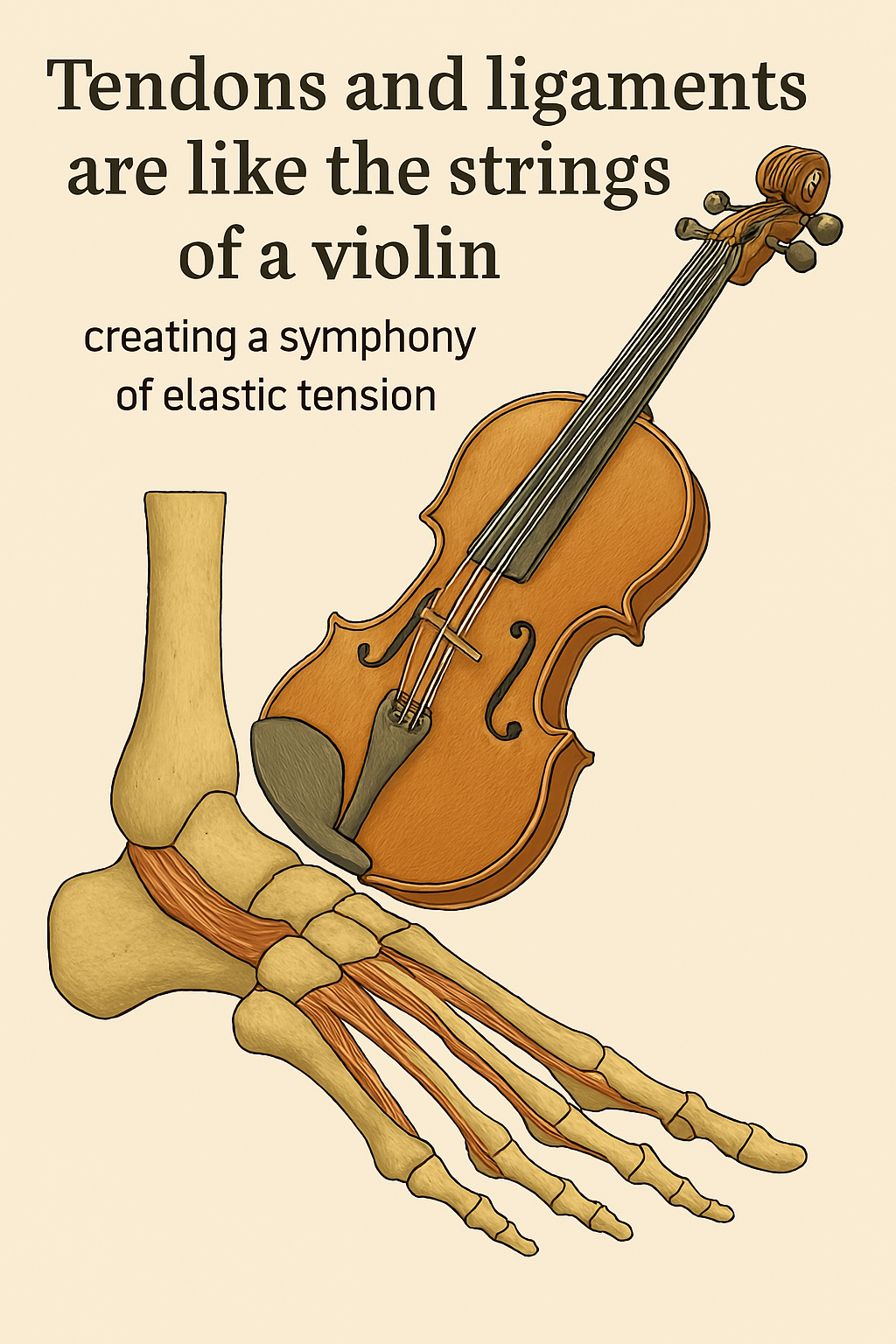
In the orchestra of motion, the ankle is often the lead violin—and the most vulnerable to a snapped string. Sprains and strains, especially lateral ankle sprains, are the number one injury in sports. When those ligamentous pulleys overstretch or tear, it disrupts the entire system’s harmony. The once-fluid tension becomes dissonant, forcing compensations up the kinetic chain and compromising proprioception, balance, and force transmission.
In the orchestra of motion, the ankle is the lead violin—complex, expressive, and essential. But when a sprain disrupts the ligamentous pulleys, it’s like a snapped string mid-sonata. The once-magical melody that could stop time becomes the jarring screech of a first attempt at the instrument… one that desperately wishes this particular performance could vanish into the past.
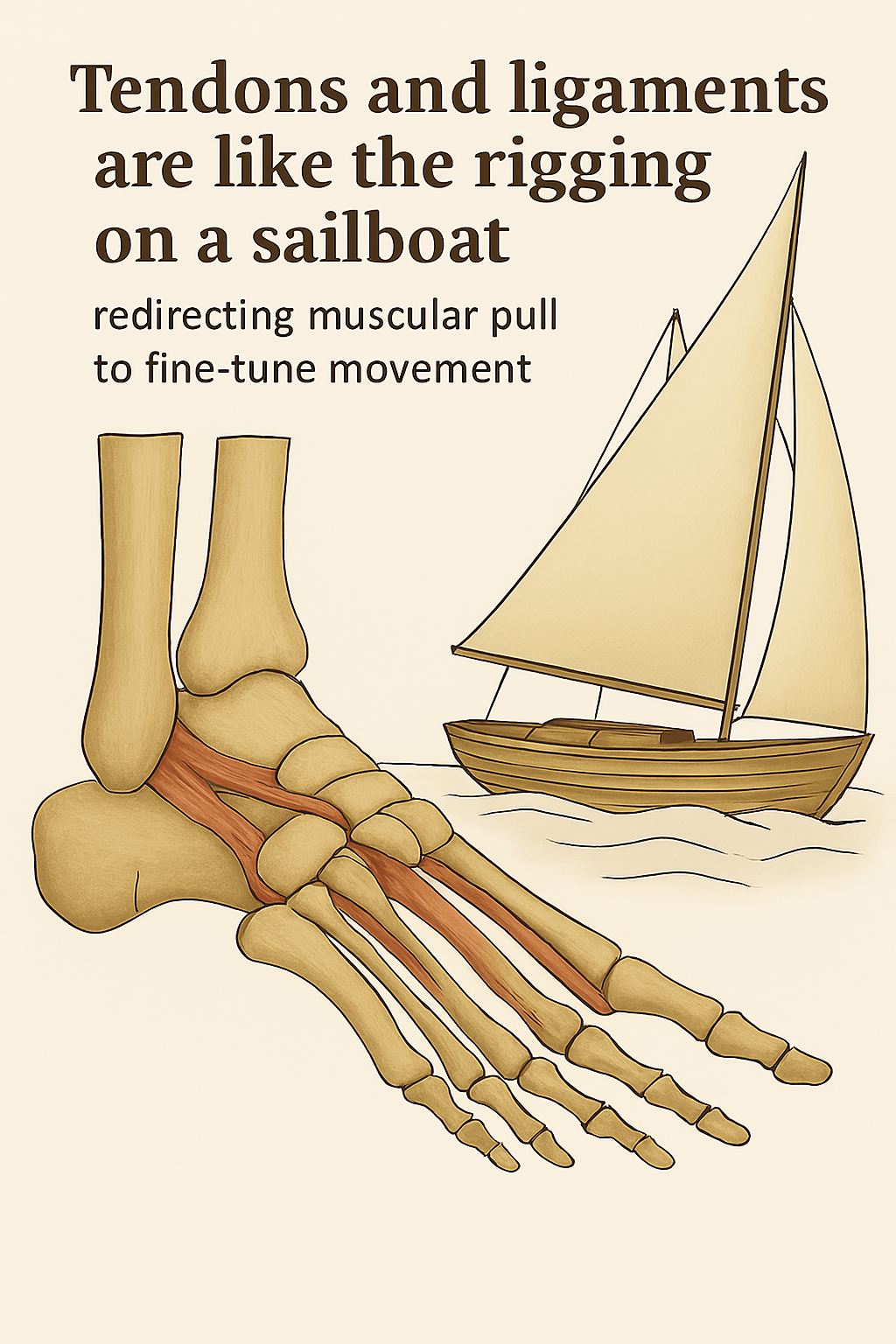
When the pulleys fray—like in the case of an ankle sprain—it’s as if the rigging on your ship suddenly gives way. The sails flap, the mast wobbles, and now the journey becomes a series of compensations. This is why foot and ankle resilience isn’t just nice to have—it’s mission-critical for movement longevity.
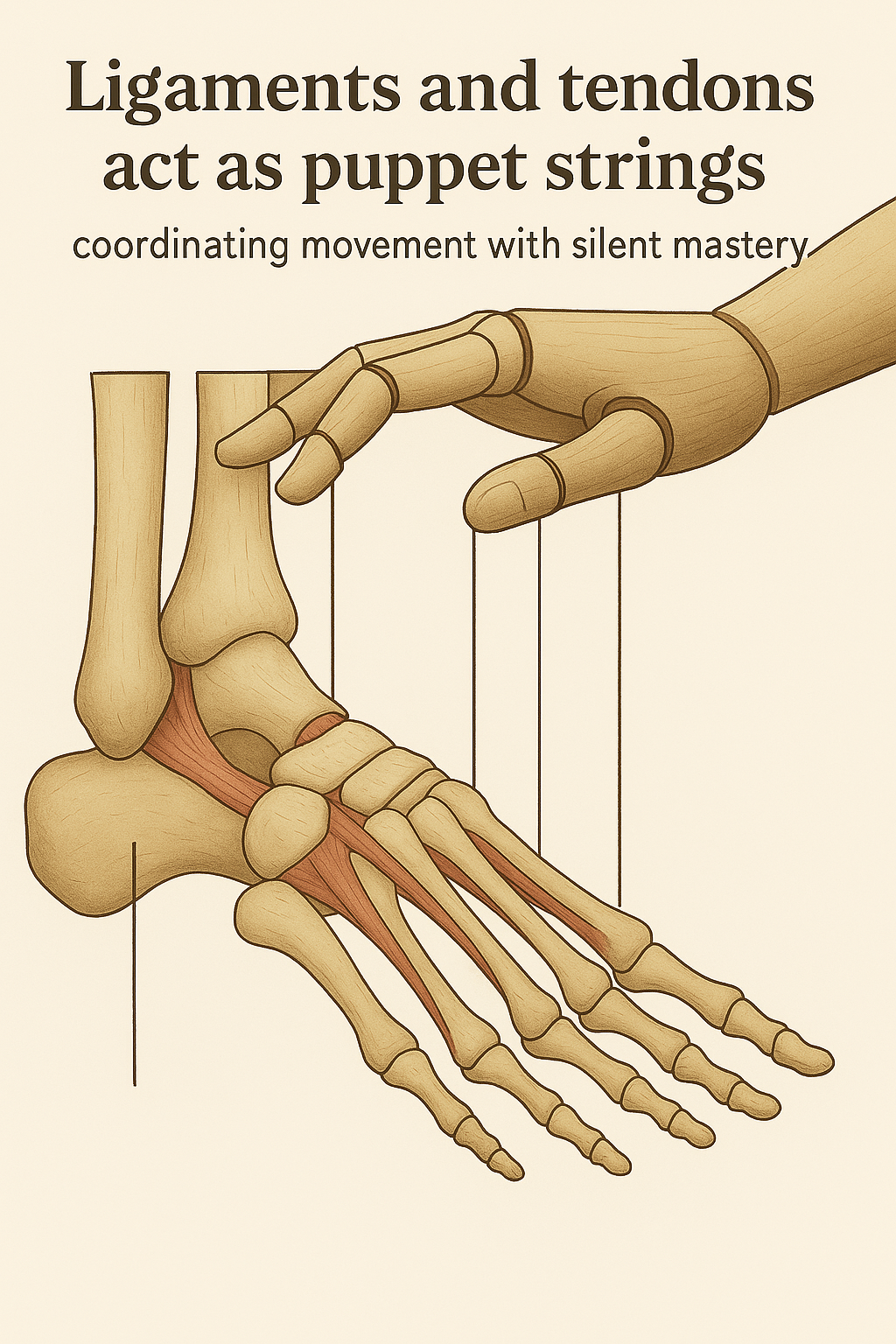
Ligaments and tendons are the puppet strings of the foot—subtle, precise, and tirelessly responsive. They guide each flex, arch, and rebound with a choreography that’s often unseen but deeply felt. Every leap, balance, or grounded stance is puppeteered by these silken strands—tensioning just right to create grace or grit depending on your intent. Without them, the show falls flat. With them, movement becomes expressive theater, danced across the stage of your mat, the trail, or the court.
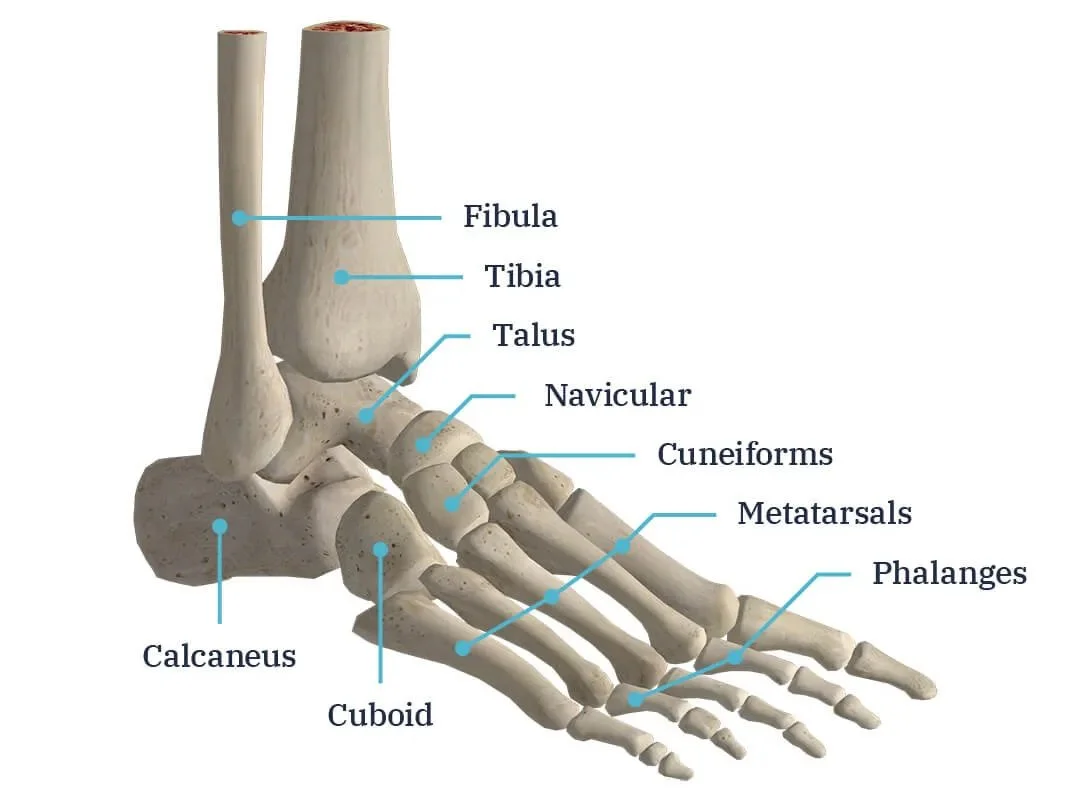
Foot Anatomy: Understanding Your Foundation
Your foot is a biomechanical masterpiece with 26 bones, 33 joints, and 100+ muscles, tendons, and ligaments, acting as a suspension system to absorb force and adapt to movement.
Key Structures
• Bones – Tarsals (stability), Metatarsals (balance bridge), Phalanges (grip & propulsion).
• Muscles – Intrinsic (fine motor control), Extrinsic (power movers), Plantar Fascia (spring-like force transfer).
🦶 Ways to Remember It:
• TOES Mnemonic – Tarsals (foundation), Opposing metatarsals (connectivity), Engineering phalanges (movement), Supporting ligaments (stability).
• Dome vs. Pancake Analogy – Strong feet = arched dome (force absorption). Weak arches = 🥞flat pancake (strain up the chain).
🦴 Bones & Joints
1. Tibia & Fibula• Function: Form the upper part of the ankle joint; transmit weight from the body to the foot.
2. Tarsals - Talus• Function: Articulates with tibia and fibula to form the talocrural (ankle) joint; key for dorsiflexion and plantarflexion.
3. Tarsals - Calcaneus (heel bone)• Function: Major weight-bearing bone; attachment for Achilles tendon; lever for calf muscles.
4. Tarsals - Navicular, Cuboid, and Cuneiforms (medial, intermediate, lateral)• Function: Stabilize midfoot; support the medial and lateral arches.
5. Metatarsals (1st–5th)• Function: Form forefoot; assist with propulsion and balance during gait.
6. Phalanges (proximal, middle, distal)• Function: Enable toe movement; fine-tune balance and push-off during walking or running.
7. Subtalar Joint (Talus + Calcaneus)• Function: Inversion and eversion of the foot; key for adapting to uneven surfaces.
8. Tarsometatarsal & Metatarsophalangeal (MTP) Joints• Function: Permit foot flexibility; MTP joints crucial for toe-off in gait cycle.
💪 Muscles
Anterior Compartment (Dorsiflexors)
1. Tibialis Anterior• Function: Dorsiflexes and inverts foot; stabilizes medial arch.
2. Extensor Hallucis Longus• Function: Extends big toe; assists in dorsiflexion.
3. Extensor Digitorum Longus• Function: Extends lateral four toes; helps lift foot during swing phase.
Lateral Compartment (Evertors)
1. Peroneus (Fibularis) Longus & Brevis• Function: Evert and plantarflex the foot; support lateral arch.
Posterior Compartment (Plantarflexors)
1. Gastrocnemius & Soleus (Triceps Surae)• Function: Powerhouse for plantarflexion; key in propulsion and jumping.
2. Tibialis Posterior• Function: Inverts and plantarflexes foot; major stabilizer of the medial longitudinal arch.
3. Flexor Digitorum Longus & Flexor Hallucis Longus• Function: Flex toes; important for grip, balance, and maintaining foot arches.
Intrinsic Foot Muscles (Layered within sole)
1. Plantar Intrinsics like:• Flexor Digitorum Brevis, Abductor Hallucis, Lumbricals
• Function: Fine-tune foot movements; crucial for arch support and proprioception.
Foot Posture & Its Impact on the Body
Your foot alignment influences movement efficiency, joint tracking, and stability.
• Neutral Foot → Balanced weight distribution, stable foundation.
• Overpronation (Collapsing Arches) → Knee valgus, hip instability, increased injury risk.
• Oversupination (Rigid High Arches) → Reduced shock absorption, compensatory movement in ankles, knees, and spine.
🔹 Quick Test – Stand barefoot, shift weight side to side. Observe arch response, then engage the foot tripod (big toe, pinky toe, heel) for alignment.
Upstream Influence: How Foot Position Shapes Your Body
Your foot mechanics dictate knee, hip, and spinal function—alignment matters.
Common Foot Postures & Their Effects:
1️⃣ Collapsed Arches (Overpronation) → Knee valgus, hip instability, ACL risk.
💡 Fix – Strengthen intrinsic foot muscles, engage foot tripod.
2️⃣ Rigid Arches (Excessive Supination) → Poor shock absorption, increased knee/back strain.
💡 Fix – Improve mobility, distribute weight evenly in lunges/squats.
3️⃣ Forefoot Dominance (Toe-Gripping) → Shortened stride, hip flexor overuse, low back pain.
💡 Fix – Train controlled heel engagement in balance poses.
4️⃣ Weak Heel Striking → Inefficient force absorption, spinal compression, gait inefficiency.
💡 Fix – Strengthen heel-to-toe transition with eccentric calf raises.
🔹 Bottom Line: Strong, well-aligned feet support fluid movement, reduced pain, and injury prevention across the kinetic chain.
Feet & The Kinetic Chain: Fascia, Posture & Performance
Your feet influence total-body stability, mobility, and resilience through interconnected myofascial pathways.
Key Fascial Connections:
• Deep Front Line – Links foot arches to pelvic floor & diaphragm. Weak foot mechanics can disrupt core stability.
• Superficial Back Line – Tight plantar fascia connects up through calves, hamstrings, and spine—potentially leading to postural shifts.
• Force Distribution – Well-aligned feet absorb impact efficiently, reducing strain on knees, hips, and spine.
Yoga Optimization—Foot Function in Balance & Alignment
Your feet shape posture and stability, playing a key role in movement efficiency.
Engagement Strategies:
• Active Grounding – Spread toes, press evenly into foot tripod—activating arches for support.
• Warrior Poses – Strengthen foot mechanics & proprioception (press evenly through heel, big toe, pinky toe).
• Broken Toe Pose – Stretches plantar fascia, strengthens intrinsic foot muscles (adjust intensity by shifting weight).
Quick Strength & Awareness Exercises
Build Resilient, Adaptable Feet:
1. Toe Scrunch Drill – Scrunch a towel with toes to activate intrinsic muscles.
2. Heel Raises – Press through big toe while lifting heels—arch activation drill.
3. Barefoot Single-Leg Balance – Close eyes to challenge proprioception.
4. Toe Yoga – Lift big toe while keeping others down, then reverse.
5. Foot Tripod Activation – Press into big toe, pinky toe, heel for better alignment.
Prehab: Resilience Before Rehab
Think of prehab as movement insurance—ensuring your body adapts to stress, stays mobile, and avoids breakdown.
Why Prehab Matters:
✔ Longevity – Stay strong, mobile, and pain-free.
✔ Smart Loading – Balance strain vs. vulnerability.
✔ Foundation First – Address imbalances before they escalate.
🔹 Prehab isn’t just prevention—it’s optimization for enhanced recovery, neuromuscular efficiency, and durability.
PEACE & LOVE: A Smarter Recovery Approach
A progressive framework focusing on intelligent healing beyond passive rest.
PEACE (Acute Injury Phase)
1. Protect – Avoid aggravation.
2. Elevate – Enhance circulation.
3. Avoid anti-inflammatories – Excess suppression delays healing.
4. Compression – Reduce swelling, improve drainage.
5. Education – Understanding movement accelerates recovery—fear avoidance prolongs dysfunction.
LOVE (Ongoing Adaptation)
1. Load – Gradual reintroduction of movement.
2. Optimism – Belief in recovery accelerates healing (science-backed).
3. Vascularization – Controlled movement enhances circulation.
4. Exercise – Long-term resilience requires active reconditioning.
🔹 Key Insight: Doing too little is as harmful as overloading—fear-based rest slows recovery and leads to compensations.
The Science Behind Optimism in Recovery
Your mindset directly impacts healing—neuroscience backs this up.
✔ Belief in recovery speeds tissue healing (scientifically proven).
✔ Fear avoidance causes compensatory movement patterns that prolong dysfunction.
✔ Proactive movement reintroduction builds confidence, restoring functional mobility before breakdown happens.
🔹 Key Takeaway: The nervous system adapts to compensations—true recovery happens when quality movement replaces dysfunction.
Feet—Knowledge Check
1. How many bones are in the human foot?
⬜ 26
⬜ 33
⬜ 20
⬜ 18
2. Which fascial line connects the arches of the feet to the pelvic floor and diaphragm?
⬜ Superficial Back Line
⬜ Deep Front Line
⬜ Lateral Line
⬜ Spiral Line
3. What is the primary function of the plantar fascia?
⬜ To provide cushioning for the heel
⬜ To connect the toes to the ankle
⬜ To support the arch of the foot
⬜ To stabilize the ankle joint
4. Which yoga pose is most effective for training foot activation and balance?
⬜ Child’s Pose
⬜ Tree Pose
⬜ Downward Dog
⬜ Cobra Pose
5. What is the primary cause of plantar fasciitis?
⬜ Weak intrinsic foot muscles
⬜ Overuse and poor foot mechanics
⬜ Improper footwear
⬜ Lack of hydration
ANSWER KEY
✅ Answer: 26 bones form the structure of the foot, providing support and mobility.
✅ Answer: The Deep Front Line runs from the arches through the inner legs, pelvic floor, and diaphragm, influencing posture and core stability.
✅ Answer: The plantar fascia supports the arch and helps absorb impact during movement.
✅ Answer: Tree Pose enhances foot engagement by requiring activation of the arches and steady tripod grounding.
✅ Answer: Overuse and poor foot mechanics lead to excessive strain on the plantar fascia, causing inflammation and discomfort.
“Join me next time on Science Snacks, where we switch gears from footloose to finger-forward—and dive into the hands and wrists, those curious creatures I love to turn my feet into for fun!” 🖐️🦶✨
- Holly